Every house is winterized, but a storm’s assault can sometimes give a house a look that is no different from the decay it suffers through every year. For a homeowner, recognition of the difference is crucial, not only for insurance claims but also to rank the urgency of repairs and stop small problems from turning into disasters.
An ice dam that unexpectedly lifts your gutters is an urgent case. A gutter joint that very slowly rusts over five years is a maintenance issue. One calls for prompt action, the other can wait. If you can recognize the indicators of each, it might save you a fortune, and your home’s quality might remain unscathed.
Here is your damage investigation guide.
The Main Distinction: Event vs. Process:
Winter Storm Damage is sudden, localized, and event-driven. It is produced directly by a certain extreme weather phenomenon, such as heavy snow, a hurricane, or an ice storm. The damage comes up suddenly, usually in groups, and directly corresponds with the storm’s movement and strength.
Normal Wear is gradual, widespread, and time-driven. It has been caused by the long-term impact of seasonal changes, sun exposure, and mild weather over many years. The deterioration is even and predictable, showing up across whole areas of your house rather than in isolated, dramatic bursts.
Your Room-by-Room Damage Assessment Guide
1. The Roof: Structure, Flashing, and Shingles:
Indicators of storm destruction include:
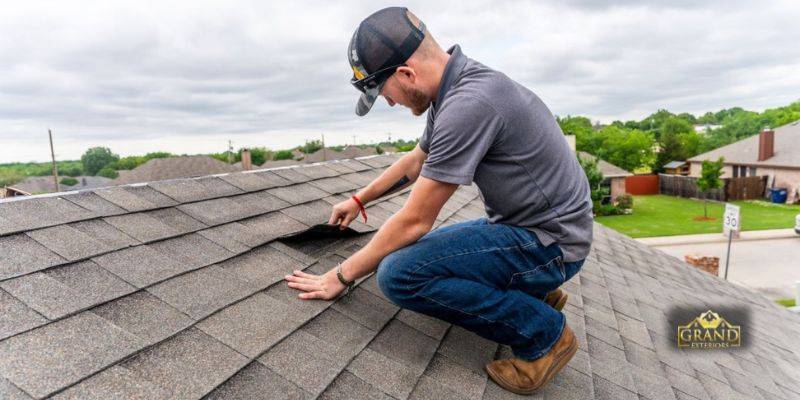
- Localized Areas of Shingle Loss – A handful (10-20) of shingles stripped away from a localized area with a distinct “wind-lift” pattern where the tabs have been lifted.
- Impact Bruising or Holes – Circular shape cracks, dents, and holes on both shingle and metal roofs created by either hailstones or depression caused by fallen limbs from trees. A visible sign is that the granules from the shingles have been knocked away, leaving a dark asphalt mat exposed within the circle of impact.
- Flashing Torn or Moved From Position – Lifting, twisting or separation of metal flashings attached to the roof due to high winds and exposure of shiny new metal is a visible sign of lift or disruption.
- Sagging/Compromised Structural Integrity – See a new visible curve or dip in the roofline due to the accumulation of snow and a heavy snow load that has caused a sudden droop in the roofline is an emergency situation.
Normal Wear Indicators:
- Granule Loss Distributed Evenly: As granules are lost, they will build up equally into the gutters, leaving large areas of shingles with no granules that look bald and are shiny (they’re usually seen first on slopes facing south and west).
- Curling or Cupping of Shingles: Due to the heat and age of the creation of the shingle, each corner will curl towards the sky (cupping) or curl to the ground (clawing) within the complete roof.
- Flashing that is Generally Brittle: The flashing will be uniformly rusted, corroded, or cracked, especially where two pieces join together. Flashings will not be bent, ripped apart, or torn apart.
- Minor or Isolated Damage Causing Water Leakage: Water leaks will be slow to develop. They develop in the location where heavy rainfall occurs for several years and damage the same area. The cause for this is the deteriorated condition of the underlayment and/or sealant.
2. Exterior Walls/Siding
Storm Damage Indicators > Concentrated Impact Damage
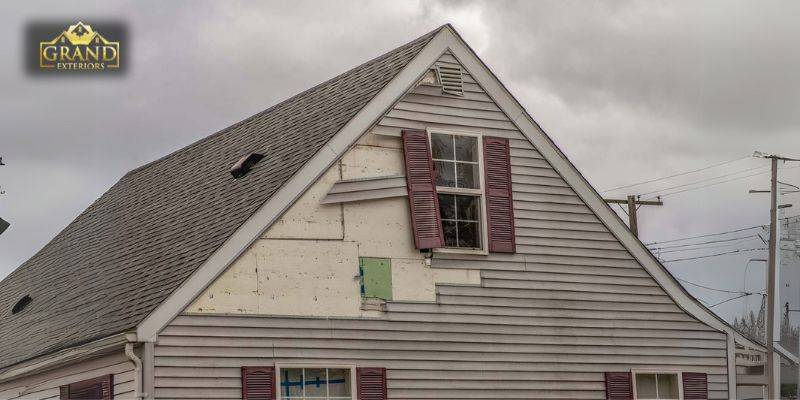
- Long Panels Torn Off > Long panels of siding that are pushed off by wind and damage to weak points of corners or seams.
- New Staining (Water) > Newly discovered water stains that can clearly be seen after specific storms and which represent a breach in the weather barrier.
Signs of Normal Wear:
- Fading or Chalking: The color of the siding is fading uniformly due to UV exposure. You can often chalk it with your finger.
- Generalized Warping or Buckling: A gradual development of siding that over time has absorbed moisture and has been subjected to thermal expansion, resulting in large areas of warped siding.
- Cracked Caulk & Shrunken Seams: Old, dried, tiny, or broken caulking and seals all over the house—this is a maintenance issue and not storm damage.
3. Windows & Doors
Symptoms of Storm Damage:
- Broken or Damaged Glass: Impacts accompanied by a clear point (a “bullseye” or “star” pattern), usually due to hail or wind-blown debris.
- Trespass Damage: Deformed frames, dysfunctional locks, or cracked wood where wind pressure or the weight of a fallen branch forced a door or window open.
- Unexpected Drafts & Humidity Entrance: A noticeable and strong draft or condensation/frost on the inside that is newly formed after a storm, revealing a damaged seal or incorrectly positioned frame.
Signs of Normal Wear:
- Failed Seals (Fogged Glass): Steady condensation or fogging trapped between the panes of double-glazed windows is the sign of a gradual seal breakdown over time.
- Sticking or Binding: The windows and doors that little by little get more difficult to open and close are the result of settled framing or swollen wood due to humidity cycles
- General Weather stripping Degradation: Weather stripping around all openings that is brittle, cracked, or missing is a uniform aging process.
4. Gutters, Downspouts, & Eaves
Signs of Storm Damage:
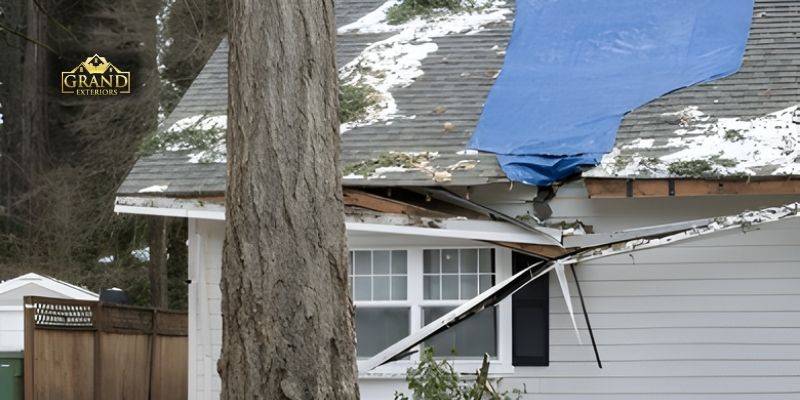
- Collapsed or Torn-Off Sections: Gutters pulled from the fascia by the weight of ice or a fallen branch, often with bent hangers and torn fasteners.
- Ice Dam “Blow-Outs”: Seams or end caps that have burst open from the internal pressure of expanding ice within the gutter.
- Crushed or Bent Components: Direct physical crushing from a fallen tree limb.
Signs of Normal Wear:
- Uniform Sagging: Gutters that gradually pull away from the fascia along their entire length due to failing hangers.
- System-Wide Rust or Corrosion: Rust perforations or seam separation appearing evenly, especially in older steel gutters.
- Slow Leaks at Seams: Minor dripping at seams that worsens gradually over seasons as the sealant fails.
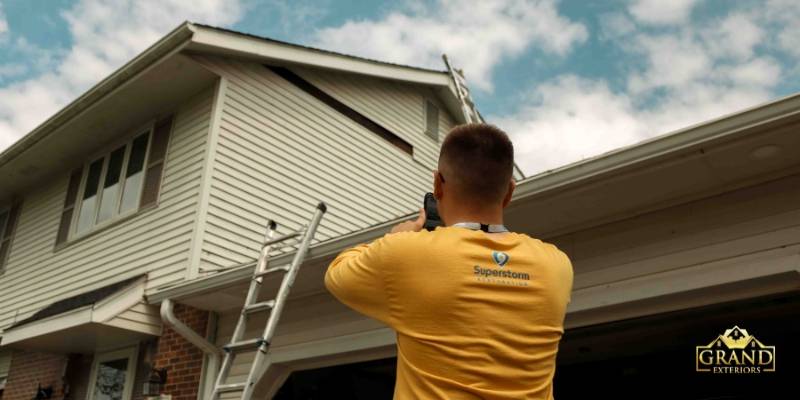
Pro Tip: After a major storm, take dated photos from multiple angles before making temporary repairs. This creates a clear “before and after” record for your insurance adjuster.
Your Action Plan: What to Do Next
- For Sudden Storm Damage: Secure and document. Tarp roofs, board up windows, and mitigate further damage. Contact your insurance company promptly to start a claim. Use a reputable, insured contractor for repairs.
- For Gradual Wear & Tear: Schedule and prioritize. Create a maintenance budget. Address issues that lead to water intrusion first (rotting siding, worn roof valleys). Plan for systematic upgrades before failure occurs.
Conclusion: Knowledge is Protection
Having the knowledge of what constitutes a weather emergency versus a natural home aging makes it easy for you as a homeowner to make a smart and prompt move. It stops you from making unnecessary insurance claims (which can lead to an increase in premiums) and, even more importantly, it does not allow you to ignore urgent storm damage that jeopardizes the structure of your house.
This winter, do not merely stare at your home but rather read it. The narrations of its past are revealed through the damage, faults, and discoloration. In case you are able to decipher its dialect, then you will be the most excellent protector that your house could ever wish for.