Your roof offers your house its first defense against the worst of nature’s stormy weather. A strong, reliable roof protects you from hard weather – rain, wind, or hail.
When preparing your refuge for a storm, the roof over your head isn’t where to settle. Consider the long-term value of better materials. The up-front cost may not just provide a stronger roof, but also priceless assurance when Mother Nature decides to be active!
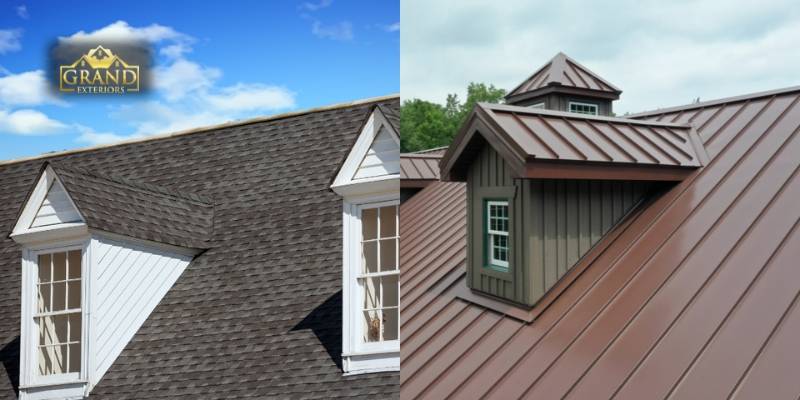
Asphalt shingles and metal roofing are two standard options for homeowners. Both are widely used, but they can act much differently in stormy weather conditions. Let’s take a look.
Pros of Asphalt Shingles:
- Inexpensive initially – great for the budget conscious homeowner.
- Widely available – easy to acquire materials and contractors for installation or repairs.
- Large variety to choose from – helps improve curb appeal.
Cons of Asphalt Shingles in Severe Weather:
- Wind resistant – standard shingles can start lifting or blowing off when wind speeds are above 60 – 80 milesper hour.
- Premium shingle products are rated for 130 mph however still risk damage in strong hurricane winds or tornado zones.
- Hail damage – large hail stones can crack or puncture pieces of shingles to leave the roof vulnerable to leaking through it.
- Shorter life span – typically lasts only 15 – 25 years, and storm prone climates will shorten the life of the roof even further.
Pros of Metal Roofing:
Hail impact resistance: A properly installed metal roof with a quality finish is very resistant to damage from hail. While large hail may result in dents to the metal roof, it is very rare for that hail to puncture the roof or disrupt its ability to shed water.
Debris Protection: Metal roofing provides excellent protection against flying debris and meteorites. Metal roofing is much less likely to suffer punctures from branches than asphalt shingles.
Water Resistant: The interlocking design of metal roof panels, especially standing seam, creates an exceptional water shedding surface. Metal roofs are also not porous so they will not absorb water or degrade due to water.
Insurance and Longevity: Many insurance companies will offer significant homeowner’s discounts on metal roofs—sometimes up to 30%—because they are seen as more resistant to damage during inclement weather. Additionally, even a high-quality architectural shingle roof will last 20 to 30 years in a storm area, while a metal roof will last you 40 to 70 years and actually last through multiple shingle roof lifecycles.
Cost Comparison of Asphalt and Metal Roofing
Comparing Costs of Repair and Replacement: An asphalt shingle roof that becomes damaged usually necessitates replacing large areas of the roof since it can be difficult to satisfactorily color-match the faded shingles. Metal roofing and standing seam roofing theoretically can replace individual panels rather than the entire system; however, the cost will be higher because it is not something that can be easily done without a professional skilled in metal roofing.
Selecting the Best Roofing Material for Your Home:
The best roofing choice is based on the budget, what kind of area you are in, and what your long-term plan is for the property.
Metal roofing may be the best option if:
- You live in an area prone to high wind or hailstorm property damage.
- You want a long-term roof that is made to last for decades.
- You would like to reduce certain insurance premiums for having a more durable roof.
- You view your roof as an investment and plan to stay in the home long enough to earn back some of the value.
Choose Architectural Asphalt Shingles if:
You would like a more cost-effective option that will still apply in a roof with a moderate climate, and are okay with a shorter roof life.
Work with a good installer who has an excellent reputation and warrants their workmanship if there is any wind uplift.
Conclusion:
In a temperate climate where cost is a factor, asphalt shingles would probably be fine. If your house were in a hurricane, high wind, or hail-affected climate, however, metal roofing would probably be your best option.
In the end, it will be a comfort level decision for you between cost versus location, versus long-term protection. You should also consider what your professional roofing contractor has to say to be sure you are doing what is best to protect your family when storm clouds or hurricane-type weather comes to your area.