Key Takeaways
- Vinyl becomes brittle in freezing temperatures, and even minor impacts can cause cracks
- Freeze-thaw cycles are the biggest winter threat to your siding
- Most warping and buckling traces back to improper installation
- Moisture behind siding causes mold and rot that you can’t see from the outside
- Inspection is your best defense before winter hits
- Never use sharp or metal tools to remove snow near siding
- Small gaps in caulking and flashing are major water entry points
- Prevention always costs less than replacement
Homeowners usually overlook vinyl siding winter maintenance until the damage is inevitable. No doubt, winter is among the most punishing seasons for your home’s exterior. Especially, vinyl siding is prone to a range of issues caused by extreme winter.
For instance, freeze-thaw cycles cause the panels to expand and contract repeatedly, resulting in problems such as cracks, moisture intrusion, and warping. These issues can quickly turn into costly repairs if left unattended.
If you want to avoid this, it’s advised to understand how to maintain vinyl siding in winter. To assist you with this, we have curated this comprehensive guide. Here, we have covered the most common causes of winter siding damage and the ways to prevent it.
If interested? Let’s explore together!
How Winter Weather Affects Vinyl Siding
Winter can affect your vinyl siding in several ways, and here are a few of the most common ones:
Thermal Contraction and Expansion
When the temperature drops, vinyl siding contracts, and it expands when temperatures rise. This thermal variation isn’t good for your vinyl siding. It causes the cracks to appear and allows water to seep into the insulation.
Brittleness in Freezing Temperatures
Apart from causing contraction, cold weather also makes vinyl significantly brittle. Vinyl siding loses most of its flexibility and fails to absorb even a minor impact. This leads to some major issues like cracks, warping, and moisture intrusion.
Freeze-Thaw Cycles
The continuous freeze-thaw cycles during winter introduce your vinyl siding to extensive stress. Even a small amount of water can damage the panel when it freezes and expands. It not only widens the cracks but also pushes the panels apart.
Wind, Snow, and Ice Buildup
Strong winds can pull away the loose vinyl panels or at least damage them. Ice buildup due to heavy snow is another threat to your vinyl siding, compromising its overall strength. As a result, the siding fails to protect your home from the harsh weather.
Common Winter Vinyl Siding Problems
Before unleashing vinyl siding winter maintenance tips, let’s take a look at the most frequent vinyl siding problems that surface during winter:
Cracking in Cold Weather
Cracking is a common occurrence during winter. Therefore, it’s essential to understand the actual cause behind this issue. Cold temperature isn’t the only culprit behind the appearance of vinyl siding cracks.
Lower temperature makes the material far more brittle, rendering it susceptible to other types of damage. For example, hailstorms can easily damage a structurally weak vinyl siding. Ice pellets and wind-driven debris can wreak havoc, causing the panels to dislocate.
Even minor impacts that otherwise do no harm during summer can cause some serious damage to the panels. Besides, hail is among the biggest concerns. You may notice small cracks after a hailstorm, especially during cold weather.
Warping and Buckling
Winter exposes various installation problems, and warped or buckled siding panels are one of them. Vinyl siding should be installed with the required spacing between each panel. If not done properly, there won’t be enough space for the individual panels to expand or contract freely.
When the temperatures fluctuate, expanding siding panels start to warp or buckle outward. This problem quickly turns into extensive damage, demanding immediate siding replacement.
In most cases, improper installation is the major cause behind warping and buckling. If your home is relatively new and the siding starts to warp, you must consult one of the best siding repair services.
The contractor will carefully look into the matter and inspect the underlying installation issues. This could be a viable option if you want to prevent vinyl siding from warping in winter.
Moisture Damage Behind Siding
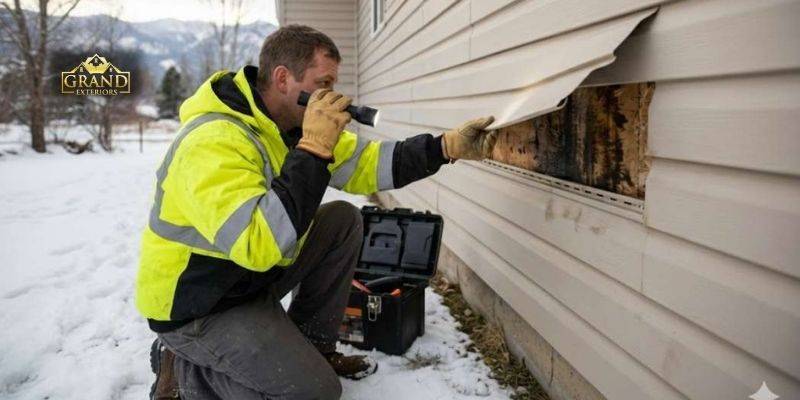
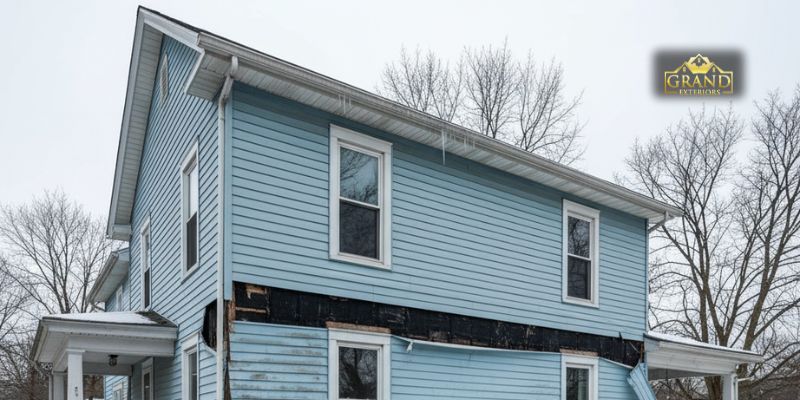
This type of damage isn’t visible from outside, which is why most homeowners don’t notice it until it’s too late. Moisture gets trapped under the siding panels once the water seeps into the cracks. It moistens the underlayment or house wrap, ultimately reaching the framing and sheathing.
It creates an ideal condition for mold growth and causes the wood to rot. Most of the moisture intrusion occurs when ice dams begin to form. This forces the water to dribble down into the panels, resulting in moisture damage.
Once the moisture is locked behind the siding panels, it worsens the situation. Since moisture has nowhere to go, it starts degrading the frame and insulation. Wet insulation fails to maintain a comfortable interior temperature because it loses its thermal value after absorbing moisture.
Loose or Detached Panels
Vinyl siding panels are interlocked but not fixed rigidly in place. This design feature allows for thermal movement (expansion or contraction). However, when not done professionally, panels could start to loosen or detach over time.
This usually happens when the panels undergo the stress of repeated freeze-thaw cycles. Strong winter winds can also aggravate the situation by detaching loose panels. Besides, moisture also damages fasteners due to corrosion, leading to unexplained detachment.
How to Prevent Vinyl Siding Cracks and Warping in Winter
Want to protect vinyl siding from freezing temperatures? Here are the most recommended vinyl siding maintenance tips:
Schedule Seasonal Inspections
The best practice regarding vinyl siding winter maintenance is to identify minor siding problems. For this purpose, make sure to hire a professional siding contractor and get your home inspected.
You can easily witness some major issues by simply walking around your home. Look at each section of siding and search for the abnormalities. Cracks or gaps are easily visible, but some underlying issues demand professional inspection.
Experienced technicians can easily locate misaligned or bowed panels. They pay attention to areas around the doors, windows, and plumbing installations. These are the usual spots where gaps start to appear and allow moisture to infiltrate.
Under extreme weather conditions, you need to rely on the expertise of professional siding experts. So, when a massive hail storm hits, don’t forget to contact a trusted siding contractor like Grand Exteriors for hail damage inspection.
Early inspection of the storm damage can help you address most of the minor issues and prevent extensive damage. However, when it comes to storm damage restoration, look for a thorough professional company.
Keep Siding Clean
Debris accumulated around the siding not only looks untidy, but it also causes some serious damage to your home’s exterior. Dust, sand, and debris create an ideal place for the moisture to hide.
If this condition persists, it leads to mold growth. The panels start to fade or discolor, causing further damage to caulk and sealants. When the fall arrives, spare some time to clear leaves and other organic debris that have accumulated around the base of your siding.
During winter, remove heavy snow as soon as possible and keep the siding free from debris. For thorough cleaning, use a soft-bristled brush. Maintaining vinyl siding in cold weather isn’t that hard. Simply removing snow and debris can keep your siding in good shape.
Besides, algae and mold can grow in small gaps and can thrive in cold temperatures. Excessive growth or uncontrolled invasion of moss or algae can compromise the strength of a siding panel. If you notice such growth, address this issue as soon as possible.
Prevent Moisture Intrusion
Preventing moisture from entering the frame and sheathing is an essential part of your vinyl siding winter maintenance. To prevent moisture intrusion, follow the tips listed below:
Inspect Caulking
Caulking serves as an effective measure to prevent moisture from entering the siding gaps. Before winter arrives, make sure to inspect the caulked joints around doors, windows, and trim.
Remove the dried-out or cracked caulk and replace it. Use a strong and high-quality caulk that is capable of offering the desired protection against a harsh outdoor environment.
Look for Damaged Flashing
Flashing is a crucial component made of materials like copper, steel, or aluminum. It prevents water from penetrating the intersections, joints, and transitions, such as chimneys, roofs, and window openings. Search for signs like corroded, lifted, or flashing strips.
Ensure Gutter Maintenance
It’s another way to protect your siding from severe winter conditions. When gutters clog, they allow the water to run down the siding. During winter, the condition may become more severe.
The overflowing water freezes quickly and creates ice dams. The water stored in these dams slowly seeps into the siding and could cause major issues. To avoid it, thoroughly clean the gutters before winter arrives.
Avoid Damaging Snow and Ice Removal Methods
When snow builds up around the siding, it’s advised to remove it at the earliest. However, to perform this task safely, you should use the right tools. Removing ice or snow with the wrong equipment could seriously damage your siding.
Since cold weather makes vinyl siding relatively hard and brittle, it takes less force to damage it. By considering the following factors, you can prevent damaging your siding while removing ice or snow:
- Avoid using sharp or pointy tools like metal shovels, scrapers, or chisels. Rather, rely on a plastic shovel with blunt edges.
- Don’t use the shovel horizontally towards the vinyl siding. On the contrary, start removing the ice by moving the shovel away from the siding.
- When removing dirt, debris, or mold, use plastic tools and soft brushes.
- Don’t use heat guns or hot water to melt ice located within the gaps. This could trigger cracking or warping.
If ice removal tends to damage the siding, it’s better to either use ice-melting products or simply wait for the ice to melt naturally.
Ensure Proper Installation
If installing new siding or replacing the old one, make sure to get it done by a professional siding contractor. Proper installation is the key to avoiding the most common siding issue. This allows homeowners to effortlessly perform vinyl siding winter maintenance.
Besides, when installed professionally, your siding will continue to perform for years to come. For instance, vinyl siding panels should be installed with sufficient spacing to allow for thermal expansion and contraction.
Pro Tip: If you aren’t satisfied with the installation of your siding, it’s better to get it assessed by a reputable siding contractor.
Signs Your Vinyl Siding May Need Repairs After Winter
Even if you follow a regular vinyl siding winter maintenance regimen, repairs are inevitable. This suggests you should consider conducting a comprehensive inspection of your siding and looking for the visible signs of damage.
Here’s what you should look for:
- Fractures or cracks are easy to identify.
- Find blistering or bubbling on the siding surface, which indicates trapped moisture.
- Misaligned panels are easy to identify because they are usually buckled or warped from thermal movement.
- Water stains on the ceiling, walls, or in your basement are a clear sign of water infiltration.
- Loose panels make a rattling sound during windy conditions. If not repaired, they get completely detached.
Any of these signs requires professional assessment. For high-quality siding repairs, look only for a well-reputed siding contractor.
Can Vinyl Siding Be Repaired During Winter?
Yes, it’s possible to repair vinyl siding during winter. However, there are certain aspects to consider. Repairs can be performed during winter if the damage is minimal. For instance, if there are some loose panels, it’s a quick fix. Besides, resealing the gaps won’t take too long.
Making these types of repairs is essential, as it helps prevent extensive damage. Also, it doesn’t make any sense to leave your siding exposed to extreme winter temperatures. This means that it would be highly recommended to perform emergency repairs during winter.
On the contrary, it would be a better idea to postpone non-emergency repairs till spring. Winter repairs are usually hard and aren’t reliable either. That’s why contractors won’t avoid repairing vinyl siding during winter.
The cold weather makes vinyl brittle and easy to break. Hence, it’s relatively hard to cut, trim, or work with vinyl panels. In addition, caulk sealants don’t cure properly in extremely low temperatures.
If you have to perform siding repairs during winter, these tips can be helpful:
- Work quickly and efficiently to take advantage of higher daytime temperatures.
- Use materials suitable for low-temperature applications.
- Temporary weatherproofing can serve the purpose for the time being. Once the weather is suitable, you can go for a permanent repair.
When to Call a Professional Siding Contractor
Not every siding repair is a DIY project. There are numerous situations where you need to call a professional siding contractor. A few of them are listed below:
Storm Damage
If your siding is hit by heavy rain or a snowstorm, hiring a contractor can help assess the true scale of damage. Generally, damage can be relatively more extensive than what initially appears.
A siding contractor can locate and identify damage that isn’t visible to the homeowners. Also, an assessment team can provide you with the documents essential for filing an insurance claim.
Hidden Moisture or Rot
Discoloration, unusual smell, and mold growth are a few of the signs related to water penetration. Moisture damage not only damages your siding but also destroys the frame, sheathing, or insulation material.
This is the area where qualified and trained technicians can help locate the hidden moisture. Once the damage is identified, repairing it won’t take much time. Nevertheless, it’s only possible when you have hired a trustworthy siding contractor.
Structural Concerns
Knowing how to prevent vinyl siding cracks is crucial. It allows you to locate the minor siding issues and address them before it’s too late. If you find structural issues like detached, buckled, or warped siding panels, it relates to significant structural damage.
Besides, huge gaps between two adjacent panels are another concern for homeowners. This indicates the underlying issues, including major structural damage. These are caused by installation defects and must be fixed before they compromise your siding’s structural integrity.
Insurance Claims
A licensed siding contractor makes it easy for you to work with the insurance company and receive the claims. They can offer estimates and documentation, and even liaise directly with your adjuster.
FAQs Related to Vinyl Siding Winter Maintenance
Can vinyl siding crack in cold weather?
Cold temperatures can make vinyl siding brittle, and even a small impact can cause some serious damage. So freezing temperatures alone can’t crack vinyl siding.
Why does vinyl siding warp in winter?
Usually, improper installation leaves no space for thermal movement. When the panels expand, they may warp or buckle.
How do you maintain vinyl siding during winter?
Inspect caulking and seams before winter. Also, keep the gutters clean to prevent issues like ice dams and water intrusion.
Can siding be repaired in freezing temperatures?
Yes, winter repairs are suitable for emergencies, but spring is a more ideal time for extensive repairs.
Final Words
Winter tends to be tough on vinyl siding. However, homeowners can prevent most of the siding issues. By simply performing regular inspections, it’s possible to avoid major problems. In addition, making timely repairs can also help prevent further damage.
At Grand Exteriors, we are always there to answer your queries related to vinyl siding winter maintenance. So, don’t wait and contact us today!