Winter is taking over in full force; it is the time for your roof to carry an enormous load in silence—ice trapped in valleys, wind-blown snowdrifts, etc. Homeowners might see and therefore notice the most obvious signs like dripping water inside or shingles on the floor, but it is not the case with professionals, who, instead, consider the whole roof condition by assessing it through a winter roof assessment. Roofers use different tools to see the building structure and find hidden signs of stressed areas, damage that has formed over time, and melting snow, which are all factors that could cause the roof to collapse at last.
This guide shares with you the winter repairs professionals do not only by indicating what they look for but also by telling you how they interpret it so that you are aware of your roof’s true condition before the season’s heaviest snow arrives.
The Mindset of a Professional Roofer: Working on the Roof Is a System
A professional roofer thinks very differently from the average person. He or she doesn’t wait until he/she reaches the eave of the roof to consider the three main weather-related stresses of a winter day;
- Cyclical Loading: The consistent accumulation and melting of snow, which puts pressure on the roof every time the snow freezes and thaws.
- Thermal Shock: The temperature fluctuations between day and night, which can cause the materials of the roof to expand and contract in a very rapid fashion.
- Ice Expansion: The continuous expansion of frost, resulting in the separation of a roof’s components, such as the roof membrane from the substrate, in the early morning and becoming completely separated from each other during the day.
The professional roofer takes a systematic approach when diagnosing problems with roofs. The diagnosis is done from the top down and inside out to prevent the problems from getting larger by addressing them before they have a chance to do so.
The Ground Level:
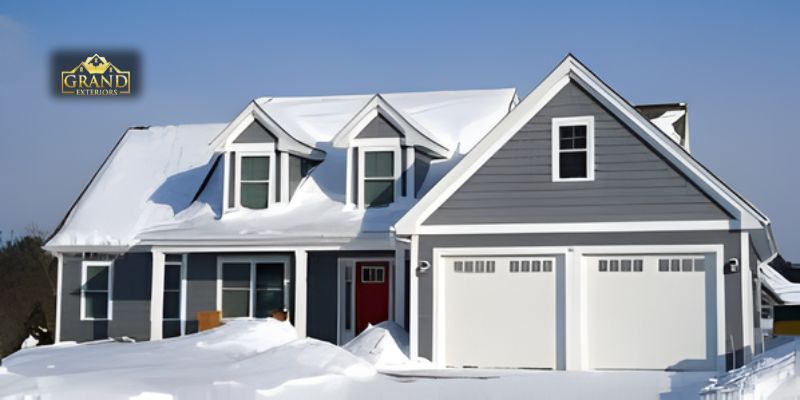
- There is very little that is done randomly by a professional roofer. All diagnoses of roofs start at the ground and are done with a survey of the perimeter of the building to understand the “story” of the roof from that viewpoint.
- One thing that roofers look for is sagging of the roofline. If there is any type of dip or curve along the horizon, then that could indicate a roof rafter or truss that has been compromised due to old snow loads. Roofers also look for signs of ice damming from the past, such as staining on the siding, dented gutters, or signs of icicles from previous winters landing on the ground from that roof.
- Roofs must also be assessed for potential falling limbs. These are limbs that could fall onto the roof when they are weighted down with ice or snow. This type of survey at ground level creates a “map” of what may need to be looked at further.
Autopsy of a Critical Attic:
An extensive written examination of a critical attic by roofing professionals can only be defined as a diagnostic examination due to the visual representation and understanding of the effects of winter stress on a roof.
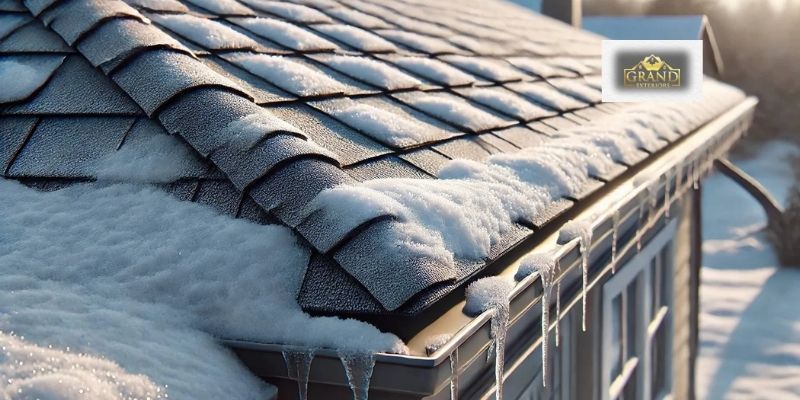
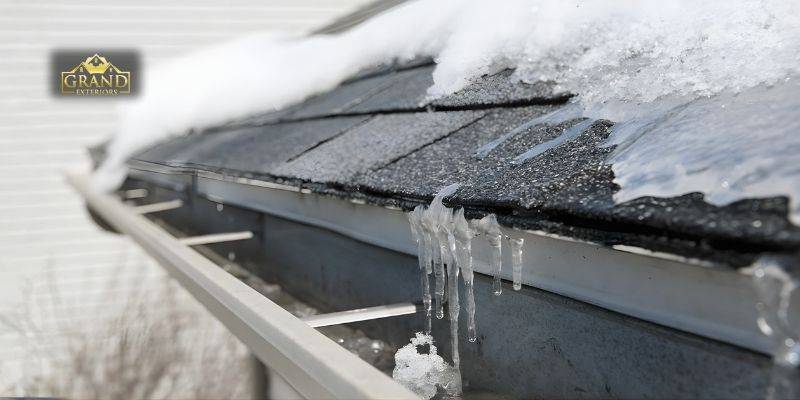
- The roof professional first inspects the ventilation system for balance. Using an electronic airflow meter, they check the volume of airflow entering the structure at the soffit and exiting the structure through the ridge vents. An unbalanced ventilation system is the primary cause of ice damming on roofs. If soffit vents become obstructed or the exhaust vents are insufficient, then the attic temperature becomes elevated, causing the melting of snow in an abnormal manner and causing the re-freezing of melted snow at the eaves.
- The roofing company’s second area of inspection is to measure the depth and the continuing flow of necessary attic insulation to prevent condensation from melting snow unevenly on the roof and to keep the roof at a uniform temperature. Missing or improperly placed insulation in an attic allows warm air to flow from the roof deck to the soffit vent, creating an area of concentrated heat, causing the melting of snow in abnormal areas, and creating thermal bridges on the roof.
- After completing the initial inspections of an attic, the third condition the roofing professional evaluates is the condition of the roof sheathing. To do so, roofers will physically touch the sheathing to determine areas of darkened staining associated with water intrusion, which may be serious enough to indicate the development of decayed wood or possibly the existence of mold.
- The last inspection of the attic occurs in complete darkness when the roofing professional determines if there are any small openings in the decking of the roof allowing sunlight to penetrate into the structure. While snow falls during a snowstorm, the small openings will allow fine, powder-like snow to accumulate in the attic, which in the roofing profession is referred to as “snow sift.”
The Roof Surface Inspection as per the Roof Surface Inspection Guidelines:
Ascertain the points of maximum roof stress based on what they find beneath the roof.
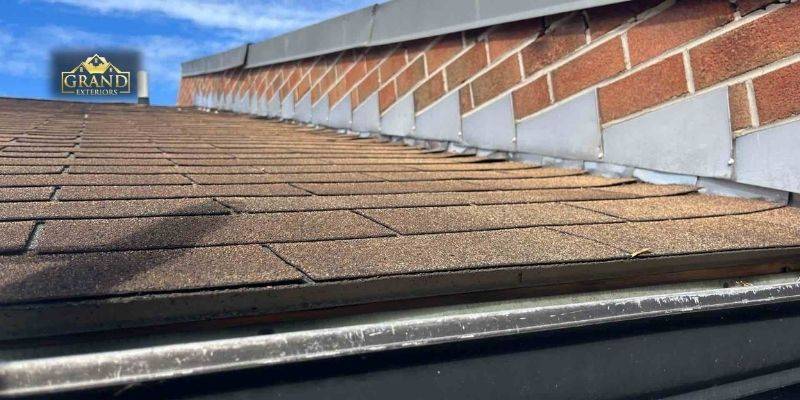
- Flashing is at the top of the list of most important considerations. All metalwork adjacent to chimney flues, vent pipes, skylight openings, and any points at a wall- and roof-junction should be inspected in detail.
- The professionals will not only be searching for obvious open holes; they will also examine for discreet signs of metal fatigue, placing stress-testing and inspecting sealant, along with checking the possibility of lifting edges that allow ice build-up and may lead to further damage and failure. Older flashings will be flex-tested by the professional to determine if they will be able to withstand winter conditions; if the flashing is brittle and crumbles, winter will cause the flashing to become damaged beyond repair.
- Shingle inspections should examine granule loss, cupping, and clawing. Winter winds can make small cracks larger and cause them to separate into major tears. The valleys, or the “gutters” of your roof, accumulate snow and water; these areas should be thoroughly inspected for appropriate sealing conditions and wear and tear.
- For residences with chimney and/or skylight features, inspection of these vertical features is increased due to the damming effect created by snow build-up from melting snow and water along this surface, thus creating intense pressure and creating ice formation. The professionals should examine for cracked mortar joints and/or failing caulk seals, which allow submerged water intrusion and freeze-thaw cycles.
The Snow Load Analysis (When Assessing In-Season):
In case the evaluation is performed within the snow event or after it, the analysis will be dynamic. Experts will estimate the snow’s weight—a cubic foot of heavy, wet snow can weigh more than 20 pounds, while light powder might weigh only 7. They will determine drift accumulation areas where wind pushes snow in a damaging way against roof projections or in roof valleys. At the eaves, they will cut through the ice layers and measure their thickness; thick, stratified ice will mean that a long-standing, repeating melt-refreeze issue is actively stressing the structure.
Conclusion: Why This Proactive Approach Matters:
Winter is not a creator of new roof problems but a merciless exploiter of hidden weaknesses. A winter assessment done by a professional is a structural stress test, a way to discover vulnerabilities when there is still time to do something about them.
The purpose is not to put fear in you so that you will accept a replacement, but to give you the power of knowledge. By comprehending the way professionals reason—systemically, structurally, and seasonally—you move from being a weather victim to a homeowner steward. This winter, the best present you can offer your roof is not just a repair, but the trained eye and preventive care that will keep it strong, even through stormy seasons.