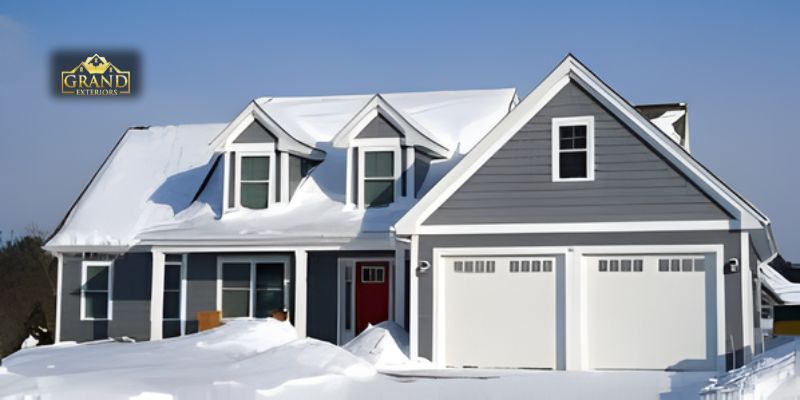
Winter brings certain challenges to homeowners; for many, it creates a winter wonderland, but there is also the hidden danger of the weight that accumulates on roofs each winter.
The majority of roofs are built to withstand a considerable amount of weight; however, it is important for all homeowners in colder climates to know the science behind snow loads in order to determine how much weight your particular roof can support.
Additionally, being knowledgeable about snow loads goes beyond simply removing the snow from your roof; it includes recognizing when your roof may not be able to support the weight of all the snow.
Snow Loads – A Complex Calculus
A snow load is defined as the downward application of snow and ice on a building’s roof. However, this is not as simple as calculating the amount of snow on the roof; there are numerous other influences that also affect the snow load capacity of your roof.
The Density of Snow
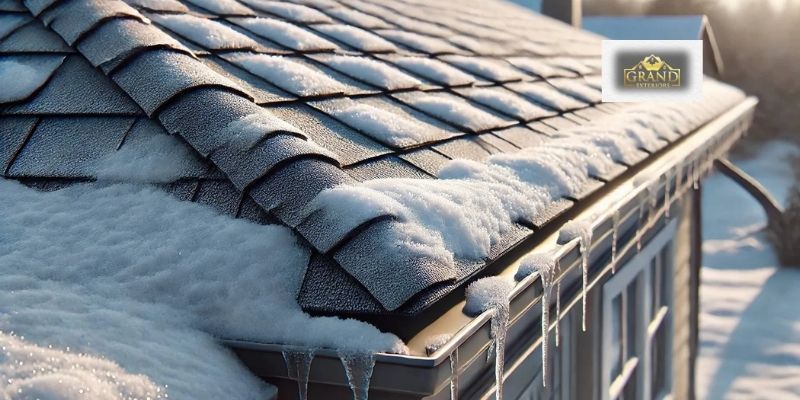
Snow isn’t always of equal density. A fresh, light layer of snow usually has a weight of about 3 to 5 pounds per cubic foot, on the other hand, extremely wet, dense and frozen snow can weigh up to more than 20 pounds per cubic foot. The density of ice, which is produced in the form of ice dams, is roughly 57 pounds per cubic foot. A single ice dam can put a very heavy burden on some parts of your roof.
The Accumulation Factor
Snow, in the beginning, does not cover the ground evenly. Wind can move the snow around and create places with very high snow accumulations, while in others there will be none at all. Areas of your roof where different planes meet, spots behind dormers, and sides that are next to higher walls will usually have an accumulation of snow that is much deeper when compared to other areas of the roof.
How Your Roof Is Designed to Handle the Weight?
As per the location of the house, current building laws determine the minimum loads to be used in the design of the structure. However, learning the roof’s structural system will help you to understand these numbers better:
The Hidden Support System
Your roof is made up of visible materials—shingles, metal, or tile—which only serve as a protective layer against the weather. The real structural workhorse is underneath:
- Rafters or Trusses: They are the main structural elements that connect your outer walls and the top of the roof.
- Roof Decking: Usually plywood or OSB sheathing that shares the load with the rafters.
- Support Walls: Interior walls that take part in the process of transferring the roof loads to the foundation of your house.
The Deflection Principle
All roofs exhibit flexibility as one of their main characteristics. It is a widely accepted practice in building codes to permit a bit of “deflection”—this, in turn, means that maximum expected loads can be supported by the roof structure bending a bit without losing safety. However, when there is a significant droop in the roof between the supports, it is usually taken as an indication that the roof is approaching its design limits.
Recognizing Warning Signs of Overload
Your roof will often give you clear signals when it’s under stress:
Immediate Red Flags
- Visible Sagging Roofline – A “dipped” or “sagging” area in the overall shape of any interior wall/ceiling may employ the use of an inner support beam.
- New Cracks on Ceiling/Walls – If there are “surprise” cracks in any of the walls/ceilings, especially found in the center of the house.
- Sticking Doors – There have been several instances of these, whereby someone has trouble opening and closing their doors.
- Sounds Coming From A “Creaking” Roof Structure – Unusual sounds such as “pop” and “crack” are heard coming from the roof framing.
Proactive Monitoring Points
- Snow depth exceeding 12 inches of average-density snow.
- Multiple layers of snow from successive storms without melting.
- Significant ice accumulation in valleys or at eaves.
- Water stains are suddenly appearing on ceilings.
Regional Considerations and Building Codes
Building codes establish minimum design standards based on historical weather data, but climate patterns are changing:
Understanding Your Zone
- Most building codes in snowy regions require roofs to handle 20-50 pounds per square foot.
- Communities often require 60+ pounds per square foot capacity.
- These are minimum standards—older homes may have been built to less rigorous requirements.
The Changing Climate Factor:
The change in climate is such that, in many cases, the volume of winter storms that occur will exceed the historical average. So, where it was once thought that a particular storm was a “100-year event”, it may now occur on a more frequent basis, it is increasingly important to have knowledge of how much weight your roof can hold.
What Homeowners Can Do to Prepare
Pre-Winter Preparation
- Have a structural engineer or qualified contractor assess your roof if you have concerns.
- Reinforce older roofs before winter arrives if needed.
- Ensure your attic insulation and ventilation are adequate to prevent ice dams.
During Snow Events
- Monitor accumulation and know when to remove snow.
- Use a roof rake from the ground to clear lower roof sections.
- Never get on a snow-covered roof yourself.
- Spread snow removal across multiple days for heavy accumulations.
When to Call Professionals
- If you notice any warning signs of structural stress.
- For snow removal from steep or high roofs.
- If ice dams have formed and water is entering your home.
Conclusion:
The connection between snow loads and the roof’s structure demonstrates the use of engineering principles in the house. If you see the roof as a system meant to support a load, then you will be an active participant in its care, and not merely a spectator. With this viewpoint, you will be able to make informed decisions regarding snow removal, recognize signs of possible failure, convey your ideas to professionals easily, and create appropriate maintenance plans for your roof system. The roof strength is not only in the shingles that you can see; instead, it is in the cooperation of all parts of the interconnected roof structure system. Consequently, when you look at your roof this winter, you will not only see a seasonal phenomenon but also a great engineering project that is very much alive with careful thought of the capabilities and limits of your home’s roof system.